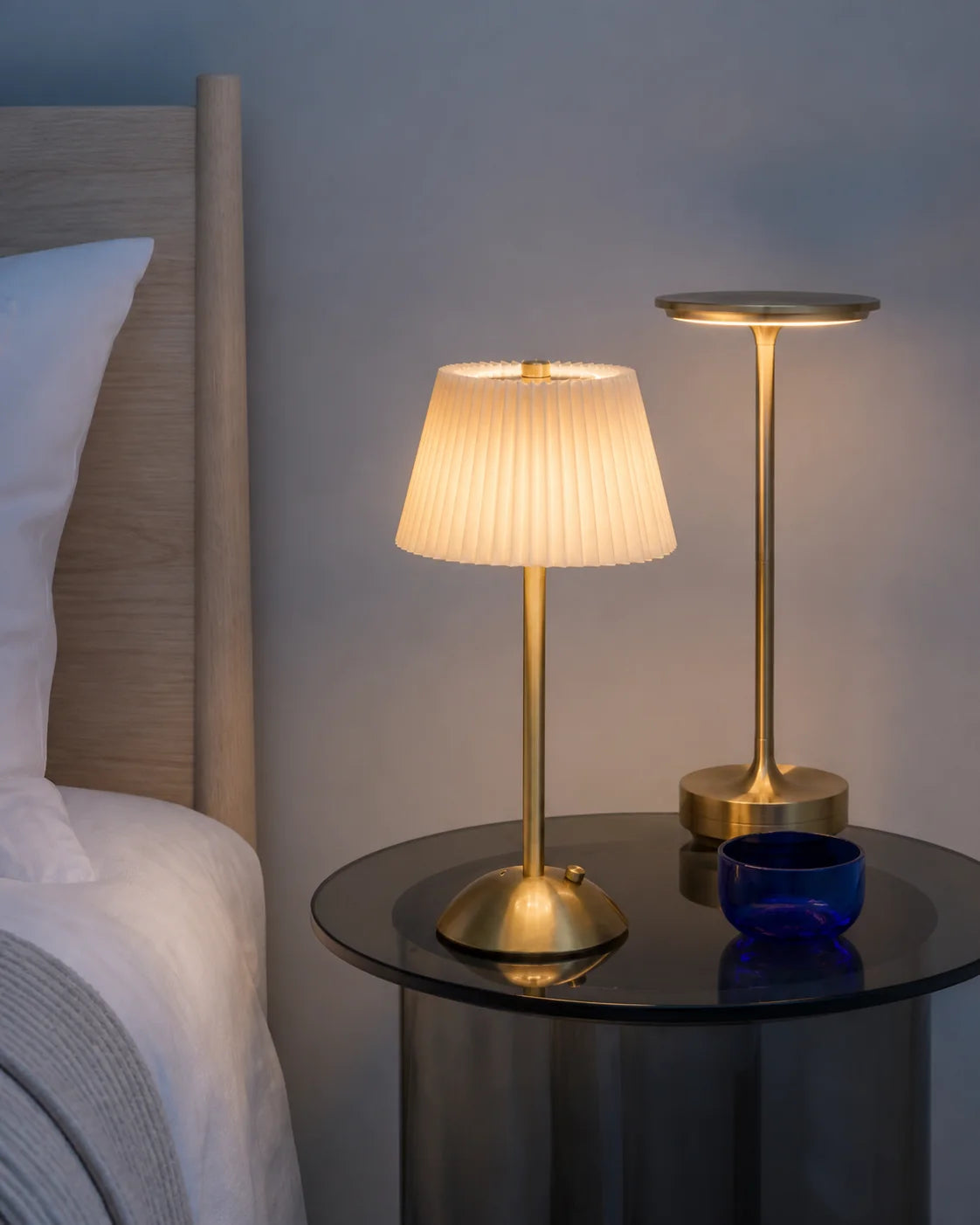
After sunset, a room asks for a different kind of attention. The light that helps us clean, work and move through the day can feel flat at night. A calmer evening begins when the room is no longer lit evenly, but shaped by a few useful pools of light.
Layering does not mean filling every corner with a lamp. It means deciding where you read, where you pause, and where you want the room to recede. Three modest lights, placed with purpose, usually create more atmosphere than one very bright source.
Begin with the way the room is used
Start with the place where your evening naturally settles. It may be an armchair, one side of the sofa, a bedside table or the end of a dining bench. Put the first lamp there and give it a clear job. A pleated shade softens the glow around a bed or reading chair, while a metal shade directs more light onto a page or tabletop.
Keep the light source close enough to be useful. A small lamp placed at shoulder height often feels more comfortable than a brighter lamp across the room. The aim is not to illuminate the whole interior from one point, but to create a place that quietly invites you to stay.

Build three useful heights
A layered room usually feels most natural when light appears at more than one height. Begin low, around table or seat level. Add a second source slightly higher, perhaps on a taller side table or shelf. If the room still feels heavy, let a third lamp brighten a distant corner or wash a pale wall.
The heights do not need to form a perfect sequence. In fact, a little irregularity makes the arrangement feel lived in. What matters is that each lamp has space around it and that no two bright points compete in the same line of sight.

A calm room is not evenly lit. It has bright places, quiet places and enough shadow between them.
Use warmth and shadow together
Warm light feels restful because it sits comfortably beside timber, ceramic, linen and other tactile surfaces. Yet colour temperature is only part of the effect. A room also needs shadow. When every wall is equally bright, objects lose depth and the interior begins to feel like a display space.
Try turning off the overhead light before adding anything new. Then switch on the lamps one at a time. Notice which surfaces catch the light and which corners are allowed to remain quiet. Darker finishes can give a pool of warm light a clean outline; cream and white shades spread it more softly.

Let one light move with the evening
A rechargeable lamp is useful because evenings rarely happen in one fixed place. It can begin on the dining table, move to a reading corner and finish beside the bed. This small freedom also helps you test a lighting plan before committing to a permanent arrangement.
Choose one portable lamp that is pleasant to handle and simple to dim. Keep the remaining lights in stable positions so the room retains a familiar rhythm. A pleated fabric lamp brings softness, a flower-bud metal lamp adds direction, and a tapered shade can provide the focused light needed for reading or work.
Finish by removing one thing
Once the room feels balanced, switch one light off. If the atmosphere improves, leave it that way. Good evening lighting is less about maximum brightness and more about knowing where light is needed. A few considered lamps can mark the useful places, soften the edges of the room and make the transition from day to night feel natural.